
The Complete Guide to Tent Rentals in Houston
Planning an outdoor event in Houston can feel simple at first. Pick a date, choose a venue, invite your guests, and start organizing the details. Then the weather, guest comfort, seating layout, catering needs, and dozens of small logistics start entering the picture.
That is where the right tent setup can make a major difference. Whether you are comparing Houston party rentals, searching for a tent rental for events, or trying to choose a dependable party rentals provider, understanding your options before booking can help you avoid costly mistakes.
In this guide, you will learn how to choose the right tent size and style, what equipment you may need, what affects rental pricing, and what to ask before signing a rental agreement.
Choosing the Right Tent for Your Event
Not every event needs the same type of tent. A backyard birthday party may require a simple shaded area, while a wedding or corporate event may need flooring, lighting, climate control, and room for several activity zones.
Start by thinking about how the tent will actually be used.
Common event tent needs include:
Guest dining and seating
Wedding ceremonies and receptions
Corporate gatherings
Graduation celebrations
Birthday parties
Festivals and community events
Vendor booths
Catering and food-service areas
Bars and beverage stations
Entertainment or dance floors
The number of guests matters, but headcount is only the starting point. A tent that technically fits 100 chairs may feel cramped once you add dining tables, a buffet, DJ equipment, a dance floor, or serving stations.
A more useful approach is to create a basic event layout before choosing the tent size.
Think about whether your event will include:
Round or rectangular tables
A stage
A dance floor
A bar
Buffet tables
Gift or registration tables
Lounge furniture
Catering preparation space
Giving these details to the rental company allows them to recommend a tent based on usable space rather than guest count alone.
Understand the Main Tent Styles
Tent styles vary in appearance, installation requirements, and flexibility. Knowing the basic differences can help you narrow your options quickly.
Frame Tents
Frame tents use a metal framework for support rather than interior center poles.
This creates a more open interior space and makes it easier to arrange tables, seating, dance floors, and other equipment without working around support poles.
Frame tents can be especially useful when the event layout requires flexibility.
Pole Tents
Pole tents use center poles and perimeter stakes to support the canopy.
They often have a classic event-tent appearance and can work well for weddings, parties, and larger outdoor gatherings.
However, they usually need enough surrounding ground space for staking.
Clear-Top Tents
Clear-top tents allow guests to see the sky while still remaining under cover.
They can create an attractive atmosphere for evening receptions and special events. Lighting installed inside or around the tent can make the space especially dramatic after sunset.
High-Peak Tents
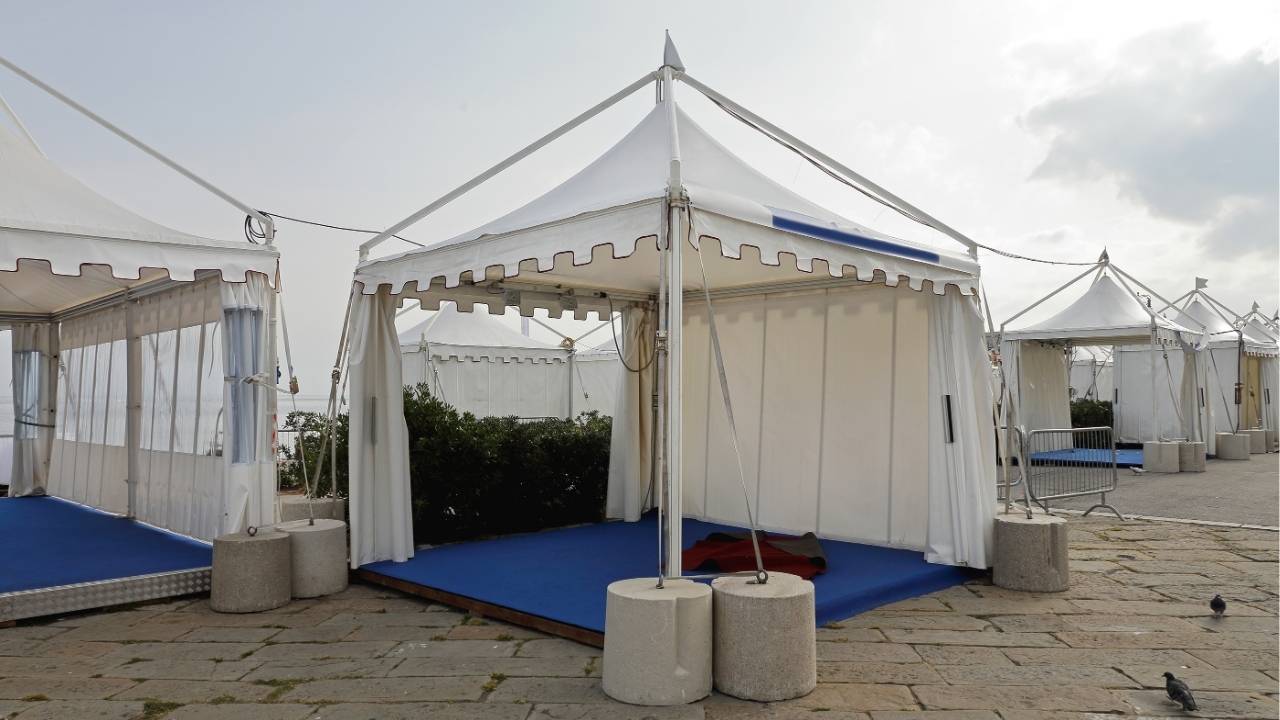
High-peak tents have elevated center points that create a distinctive appearance.
They are popular for weddings, upscale parties, entrances, cocktail areas, and smaller event spaces where visual presentation matters.
The best option ultimately depends on the location, surface, guest count, event design, and budget.
Plan for Houston Weather and Guest Comfort
Outdoor events always involve weather risk, and Houston conditions can change quickly.
A tent provides valuable shelter, but the canopy alone may not be enough to keep guests comfortable.
Sidewalls can help protect guests from wind or rain. Fans may improve air movement during warm conditions, while portable air-conditioning systems may be worth considering for more formal events held during hotter periods.
Your rental plan may also include:
Tent sidewalls
Fans
Portable cooling equipment
Lighting
Flooring
Rain gutters between connected tents
Entry coverings
Covered walkways
It is also important to consider the ground surface.
Grass, concrete, asphalt, patios, and parking areas may require different installation methods. Always tell the rental company where the tent will be installed.
Overhead obstacles matter too. Trees, utility lines, structures, landscaping, fences, and underground utilities may influence tent placement.
A site inspection can be helpful for complicated setups or larger events.
Think Beyond the Tent
One of the easiest planning mistakes is focusing only on the tent and forgetting everything that needs to go underneath it.
Most outdoor events require several rental categories working together.
Depending on your event, you may need:
Tables
Chairs
Linens
Lighting
Dance floors
Staging
Bars
Lounge furniture
Serving tables
Portable flooring
Decorative accessories
Ordering related equipment together can simplify planning because the delivery and installation schedule may be coordinated more easily.
Lighting deserves special attention.
Even daytime events can continue after sunset, and a dark tent can quickly become uncomfortable or unsafe. Lighting may include chandeliers, string lights, perimeter lighting, uplighting, or practical lighting for food and service areas.
Electrical access should also be planned ahead.
If DJs, catering equipment, lighting systems, fans, or other powered equipment will be used, make sure the venue can support the electrical demand. A generator may be required for some outdoor locations.
What Affects Tent Rental Pricing?
Tent rental costs vary because every event setup is different.
Several factors usually influence the final price.
These may include:
Tent size
Tent style
Rental duration
Delivery distance
Installation requirements
Surface conditions
Sidewalls
Flooring
Lighting
Cooling equipment
Tables and chairs
Labor
Event timing
Setup and breakdown schedules
Instead of choosing a company based only on the lowest advertised price, request a detailed quote.
A complete estimate should clearly explain what is included.
Ask whether the price covers delivery, installation, breakdown, pickup, taxes, and additional equipment. Understanding these details before booking can prevent unexpected charges later.
Questions to Ask Before Renting a Tent
A short conversation with the rental company can reveal a lot about how smoothly your event is likely to go.
Consider asking:
What tent size do you recommend for my guest count and layout?
What tent style is best for my venue?
Can the tent be installed on my surface?
Are setup and breakdown included?
When will installation take place?
Are sidewalls available?
What happens if severe weather is expected?
Can you provide tables, chairs, lighting, or flooring?
Are there additional delivery or labor fees?
Does the venue require special installation approval?
What information do you need before providing a final quote?
You should also ask how far in advance you need to reserve equipment.
Popular weekends, wedding seasons, graduation periods, and major holidays can create higher demand. Booking early provides more options and gives you time to make changes if the guest count or event layout evolves.
Case Study: Turning a Backyard Into an Event Space
A Houston-area family planning a milestone birthday expected about 80 guests at a private home. Their original plan was to rent a small canopy and place several tables underneath it. After reviewing the layout, they realized the space also needed room for catering, a dessert table, drinks, and guest movement.
The rental team recommended a larger tent with a separate food-service area, sidewalls, lighting, and strategically positioned tables. Instead of feeling crowded, the backyard functioned like a complete event venue. Guests had shade during the afternoon, comfortable seating for dinner, and enough covered space to continue celebrating after sunset.
The difference came from planning the entire event footprint rather than simply calculating the number of chairs.
Book Based on the Event You Want to Create
The right tent is more than temporary shelter. It helps define the event space, protects important activities, improves guest comfort, and gives you greater control over an outdoor celebration.
Start with your guest count, venue, surface, and event layout. Then consider furniture, lighting, weather protection, catering space, and entertainment needs before requesting a quote.
Most importantly, work with a rental company that takes the time to understand the entire event rather than simply recommending the smallest tent that fits your guest list.
Ready to start planning? Request a personalized tent rental quote based on your guest count, venue, and event setup so you can reserve the right equipment before your date fills up.